

What exactly does the 70/30 rule mean?
The rule states that around 70 percent of a room should be defined by a dominant style, a primary color, or a consistent material, while the remaining 30 percent is reserved for contrasts, accents, and individual details. This ratio creates visual calm without making the room feel boring. At the same time, it prevents the opposite extreme: a collection of too many styles, colors, and forms that can quickly appear chaotic.
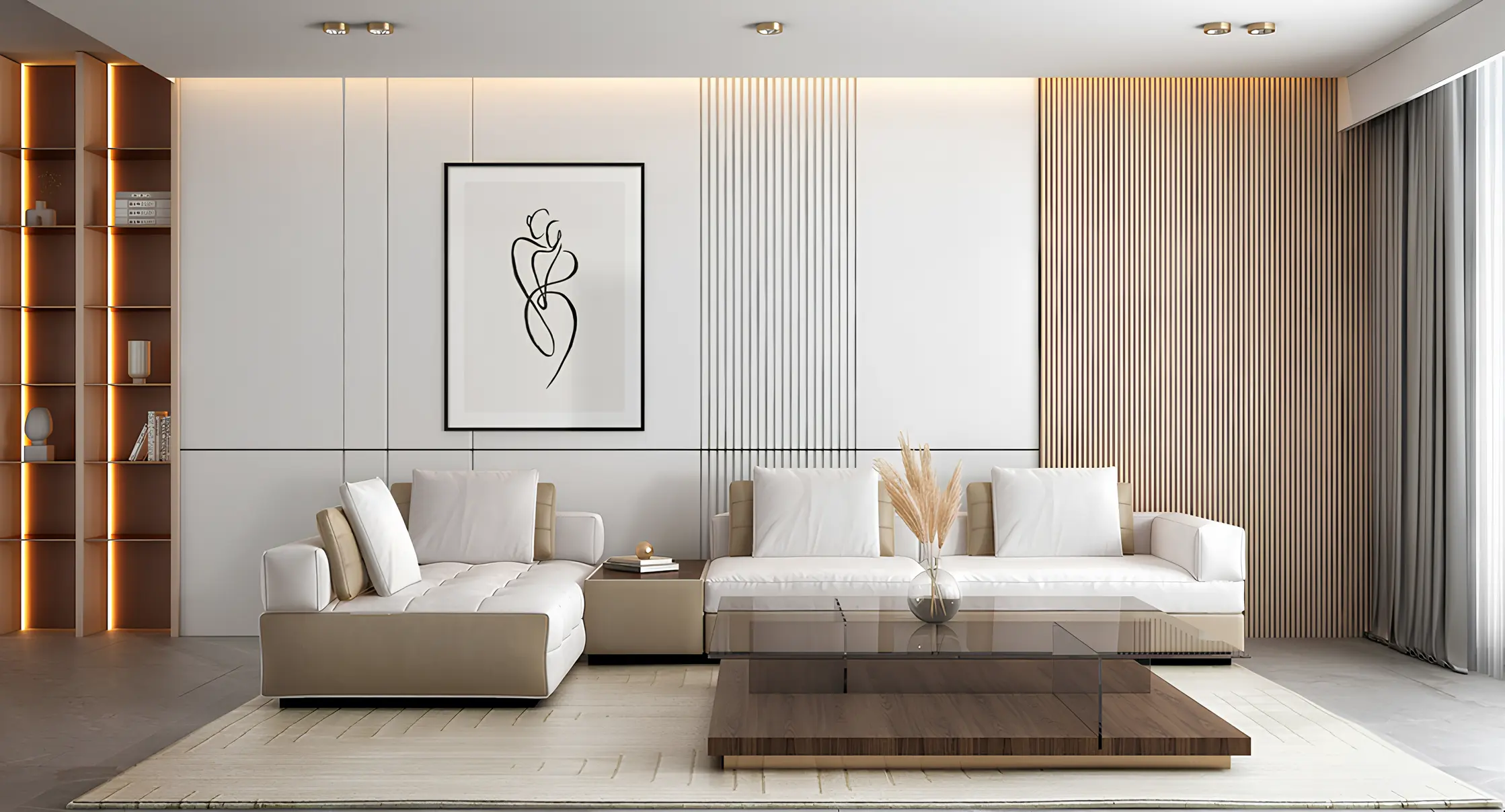
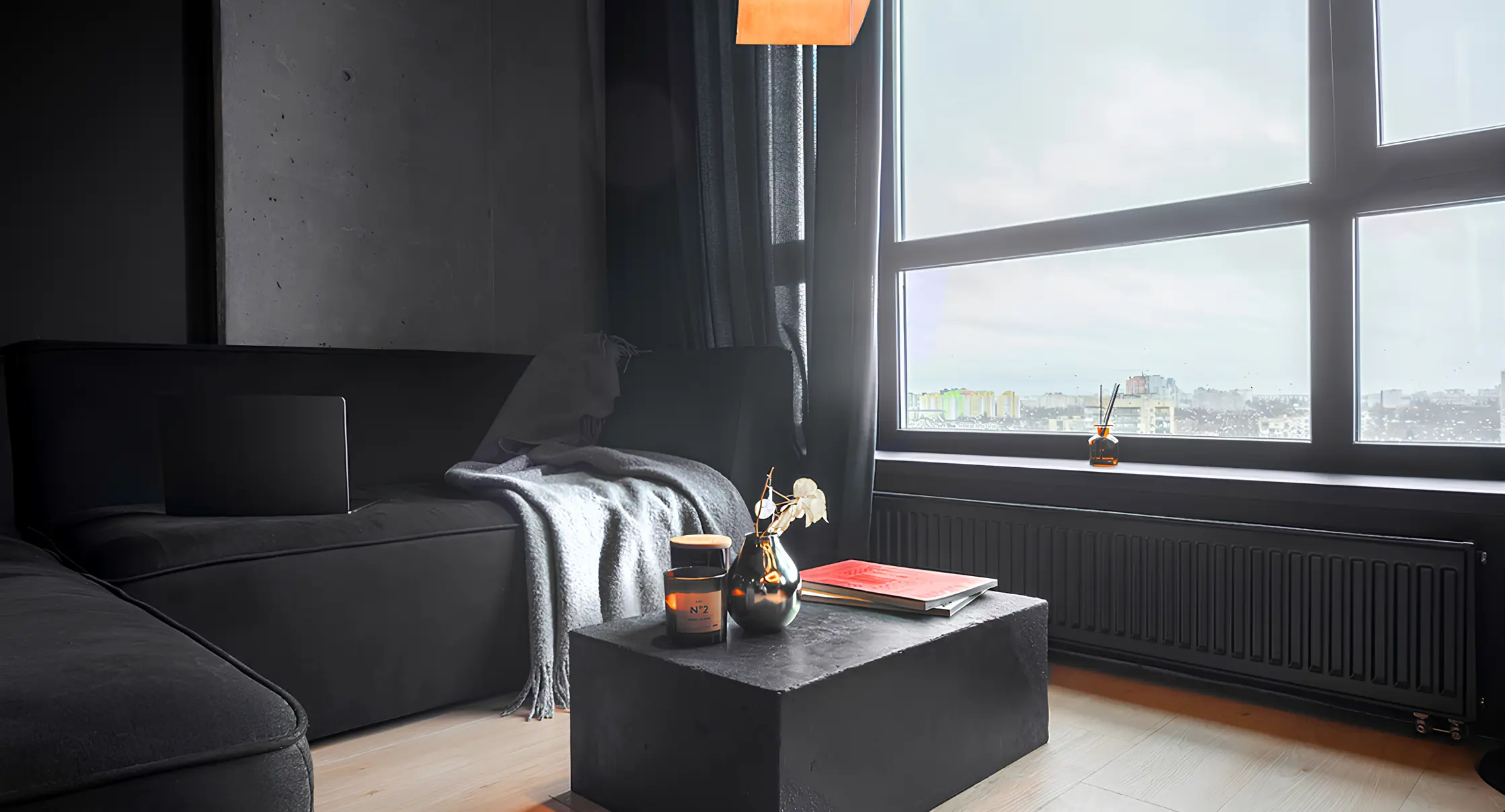
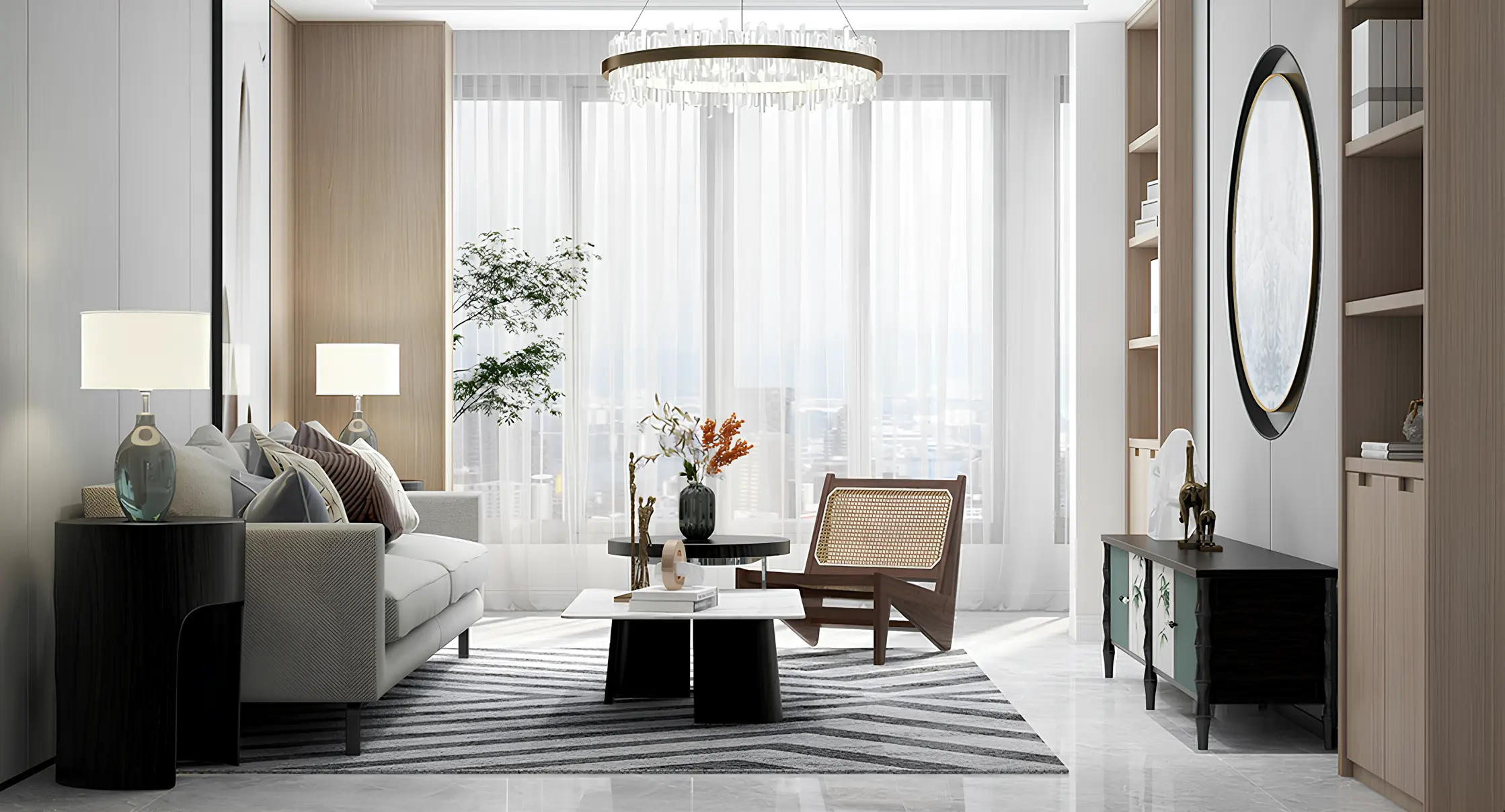
In practice, this could mean that 70 percent of a living room is defined by warm, neutral tones such as beige, cream, or soft shades of gray, for example on the walls, floor, and large pieces of furniture such as the sofa. The remaining 30 percent is then used for deliberately placed accents: a dark chocolate tone on a sideboard, a graphite cushion, a piece of art in a stronger color, or distinctive textiles.
In practice, this could mean that 70 percent of a living room is defined by warm, neutral tones such as beige, cream, or soft shades of gray, for example on the walls, floor, and large pieces of furniture such as the sofa. The remaining 30 percent is then used for deliberately placed accents: a dark chocolate tone on a sideboard, a graphite cushion, a piece of art in a stronger color, or distinctive textiles.
Why does this principle work so well?
The human eye tends to perceive a room as pleasant when there is a clear visual structure to orient itself around. Too many equally dominant elements overwhelm perception, while too little variation can feel sterile. The 70/30 rule creates the right balance between structure and individuality, a principle that can be applied to almost any type of room, from the living room and bedroom to the kitchen.
How to Apply the 70/30 Rule Correctly in Home Design
When applying the rule at home, it makes sense to start by defining the main color or material that should dominate the room. Only then should accents be selected to create intentional contrast without disrupting the overall impression. It is important that accent colors or materials recur throughout the room rather than appearing in isolation in a single spot.
This creates a coherent overall look.This principle has proved particularly useful for families building or renovating a home because it makes clear decisions easier. Instead of getting lost in endless combinations of colors and materials, the 70/30 rule provides a reliable structure that can guide every subsequent decision.
This creates a coherent overall look.This principle has proved particularly useful for families building or renovating a home because it makes clear decisions easier. Instead of getting lost in endless combinations of colors and materials, the 70/30 rule provides a reliable structure that can guide every subsequent decision.
Professional Support from an Interior Design Studio in Berlin
Although the rule sounds simple, applying it in practice is often demanding: Which materials work well together? Which accent color looks refined rather than arbitrary? This is where professional interior design comes in. In our showroom in Berlin, clients can experience and combine materials, textiles, and furniture on site instead of visiting different stores one by one. Through direct collaboration with furniture, lighting, and textile manufacturers, we create concepts that are tailored precisely to each home, from the initial idea to full implementation.
Common Mistakes When Applying the Rule
A common mistake is to use the accent color too generously, so that it is no longer perceived as a contrast but as a second main color. It is equally problematic when the 30 percent is not distributed evenly throughout the room but concentrated in one area. The result is an unbalanced impression rather than a harmonious overall look. The ratio also matters when choosing materials: too many different surfaces and textures can make a room feel restless even when the color palette itself works well.
The 70/30 Rule as a Basis for Long-Term Decisions
One major advantage of this principle is that it also provides guidance for future changes. If 70 percent of a room’s basic structure is deliberately kept neutral and timeless, the remaining 30 percent can be adjusted easily later, for example with new cushions, a different piece of art, or seasonal accessories. This keeps the home flexible without requiring a complete redesign every time something changes. For families planning for the long term, this aspect of the 70/30 rule is often especially important.